When a tooth does not hurt, it is natural to assume that it is healthy. In reality, the absence of pain is not enough to assess the health of your mouth. Some dental and gum problems can develop gradually and remain difficult to notice in their early stages. Paying attention to certain signs can help you understand when it may be appropriate to see a dentist, but it cannot replace a professional dental assessment.
At Archway Dental Group in Archway, we consider prevention an important part of general dentistry. Knowing how to tell if your teeth are healthy means becoming familiar with your own mouth without relying solely on pain as a warning sign. The colour and surface of your teeth, the condition of your gums, sensitivity, breath, chewing and changes over time can all provide useful clues, while regular dental examinations and diagnostic tests, when appropriate, allow us to assess areas that you cannot evaluate simply by looking in the mirror.
How can you tell if your teeth are healthy even when they do not hurt?
Pain is an important warning sign, but it does not provide a complete picture of dental health. A tooth can have early decay without causing noticeable symptoms, just as gum problems may develop gradually before you experience significant discomfort. For this reason, a tooth that does not hurt is not necessarily free from problems. Paying attention to your mouth at home can be useful, but this should be supported by regular dental examinations.
Changes you may notice include a difference in tooth colour, new or unusual marks, small chips or cracks, sensitivity that was not there before or discomfort when chewing. You might also notice that the surface of a tooth feels rougher, that food repeatedly becomes trapped in the same place or that dental floss behaves differently in an area where it previously passed normally. These signs do not automatically mean that there is a dental condition, but a persistent change is worth having checked.
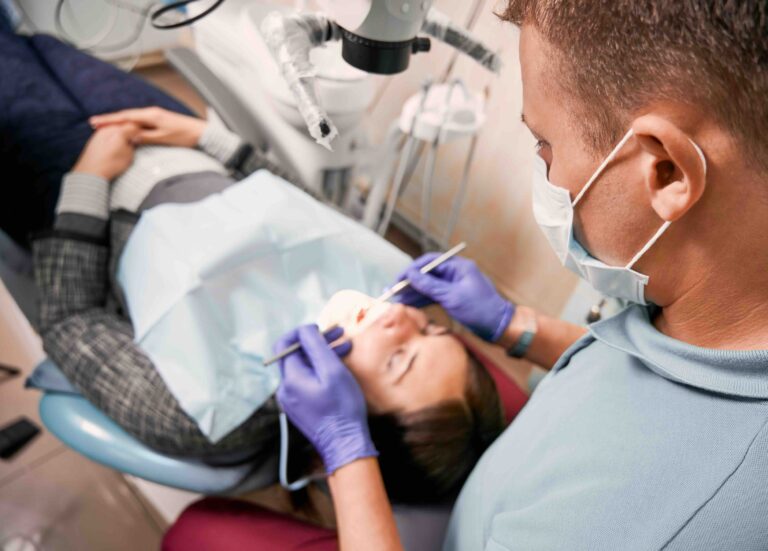
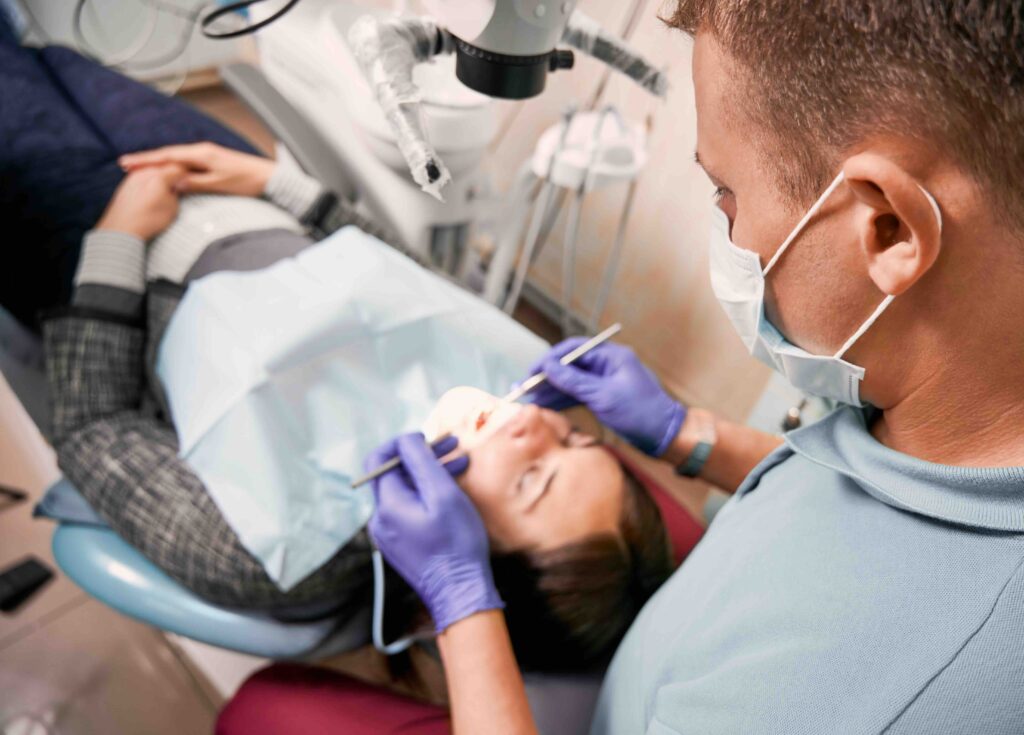
Trying to diagnose a dental problem yourself using online photographs, home tests or sharp objects to examine the surface of a tooth is not advisable. Different conditions can look very similar while requiring completely different approaches. A dentist can examine the teeth and surrounding tissues directly and, where clinically appropriate, use diagnostic tools such as digital X-rays or panoramic imaging to gather information that cannot be obtained through a simple visual check at home.
What should you look for in the colour and surface of your teeth?
Healthy teeth do not necessarily have to be perfectly white. Natural tooth colour varies considerably from person to person and even between different teeth in the same mouth. Automatically associating whiteness with health can therefore be misleading: naturally darker teeth can be completely healthy, while very white teeth may still have problems that are not visible on the surface. What matters more is whether you notice a change from what is normal for you.
New marks, darker areas, lines or changes in the tooth surface can have a variety of causes. Some staining may be superficial and related to food, drinks or other habits, while in other cases a change may need to be assessed by a dentist. Small chips and cracks also need to be considered in context. Not every minor irregularity requires treatment, but it is important to establish whether the structure of the tooth has been affected.
It is not advisable to try to remove stains or irregularities yourself using abrasive substances, metal instruments, inappropriate use of bicarbonate of soda or products that have not been recommended by a dental professional. Scrubbing a tooth more aggressively cannot tell you whether a dark area is simply staining or tooth decay, and it may damage the tooth surface or irritate the gums. If the appearance of a tooth changes and the difference persists, the safest approach is to have it assessed professionally.
Why are your gums important when assessing oral health?
Oral health is about more than your teeth. Your gums and the tissues that support your teeth also play an essential role, so paying attention to their condition can provide useful information. Healthy gums should not show persistent inflammation, obvious swelling or recurrent bleeding. Gums that bleed regularly should not be ignored, even if they are not painful.
Bleeding during brushing or flossing is sometimes considered normal, leading some people to clean the area less thoroughly. However, reducing oral hygiene can allow more plaque to accumulate. Instead, it is important to check whether your cleaning technique is appropriate and speak to a dentist or dental hygienist to understand why the bleeding is occurring. Plaque and tartar can contribute to gum inflammation, and once tartar has formed, it cannot be effectively removed with normal toothbrushing alone.
Other changes should also be assessed, including gums that appear to be receding, teeth that seem longer than before, localised swelling or persistent changes in the shape of the gum tissues. At Archway Dental Group, we can combine dental examinations with professional dental hygiene and periodontal assessment when appropriate, allowing us to consider not only individual teeth but the overall health of your mouth.
Can you have tooth decay without feeling any pain?
Yes. Tooth decay can be present without causing pain, particularly in its earlier stages. The process may begin in the outer layers of the tooth without immediately affecting the more sensitive structures. Waiting for a tooth to hurt before arranging a dental examination can therefore mean discovering a problem only once it has progressed further.
In some cases, more subtle signs may appear before significant pain develops. These can include sensitivity to hot or cold temperatures, discomfort when eating sweet foods, an unusual sensation when chewing or food repeatedly becoming trapped in the same place. In other cases, you may notice no symptoms at all. Certain areas, such as the surfaces between two teeth, are also difficult to inspect yourself, meaning that a problem may not be visible when looking in the mirror.
Regular dental examinations are valuable precisely because they mean diagnosis does not depend on symptoms alone. When clinically appropriate, digital X-rays can help your dentist examine areas that cannot be fully assessed through visual examination alone. Trying to diagnose decay yourself using online images or probing a suspicious mark with household objects is not recommended. Only a dental assessment can determine the nature of a suspicious area and whether it should simply be monitored or requires treatment.
What does it mean if your teeth are sensitive to hot or cold temperatures?
Tooth sensitivity is relatively common and may occur when drinking something cold, eating hot or sweet foods, or even while brushing. There are several possible causes, which is why sensitivity should not automatically be assumed to mean tooth decay. It may, for example, be associated with exposed sensitive areas of the tooth, gum recession, wear of the tooth surface or other conditions that require individual assessment.
The duration and nature of the discomfort can also provide useful information to your dentist. Brief, occasional sensitivity is different from severe or spontaneous pain, or discomfort that continues after the hot or cold stimulus has been removed. If one tooth suddenly begins to feel noticeably different from the others, or the symptoms become more frequent or intense over time, it is advisable to have the tooth checked rather than waiting for the discomfort to become more significant.
Using desensitising products without professional advice may sometimes reduce the symptom, but it does not necessarily identify its cause. Aggressive home remedies or applying substances directly to the affected tooth should also be avoided. The first step should be to understand why the sensitivity has developed. Your dental professional can then recommend the most appropriate approach for your individual circumstances.
Why can bad breath and an unpleasant taste be signs worth checking?
Your breath can temporarily change after eating certain foods or when you first wake up, but persistent bad breath deserves more attention. In many cases, it may be associated with plaque build-up, deposits on the tongue or gum problems, although the causes are not always dental. Persistent bad breath should not simply be covered up with mints, sprays or mouthwash.
A recurring unpleasant taste or the feeling that a particular area of your mouth has an unusual smell may also be a reason to arrange an assessment. A dentist can examine the teeth, gums, existing restorations and areas that may be difficult to clean to check for conditions that encourage bacterial accumulation. Professional dental hygiene can also help remove plaque and tartar that cannot be completely removed through home care alone.
Strong mouthwashes or DIY remedies are not a universal solution. Masking an odour without understanding its cause can delay the identification of an oral health problem. Good home care, interdental cleaning, professional dental hygiene and regular examinations provide a more appropriate approach to maintaining oral health.
How can chewing help you understand whether a tooth is healthy?
Chewing should normally be comfortable, without pain or the sensation that one particular tooth is making contact differently from the others. Discomfort that occurs only when biting certain foods, a sharp sensation when releasing pressure or finding yourself unconsciously avoiding one side of your mouth can all be useful warning signs. Pain when chewing should not be ignored, even if it disappears as soon as you stop biting.
There are several possible explanations, and the cause may involve the tooth itself, an existing filling or restoration, the tissues supporting the tooth or other aspects of the way your teeth meet. Grinding and clenching can also contribute to discomfort, tooth wear or muscular tension. It is not possible to identify the cause simply by repeatedly biting on the tooth to “test” it. Doing so may increase discomfort without providing any reliable diagnostic information.
At Archway Dental Group, we can assess these symptoms as part of general dentistry, considering the teeth, gums and chewing function together. Where necessary, diagnostic tools and X-rays can provide additional information. The aim is to identify the cause of the symptom before determining whether treatment is required and, if so, which approach may be appropriate.
Why should you have dental check-ups if your teeth seem healthy?
One of the main purposes of a dental check-up is to assess your mouth when there appears to be nothing wrong. Always waiting for pain means that a dental appointment becomes a response to a symptom, whereas preventive care can help identify changes at an earlier stage. The appropriate interval between check-ups does not necessarily need to be the same for everyone. Your dentist can recommend a schedule based on your oral health, previous dental treatment, gum condition, oral hygiene and individual risk factors.
A dental examination involves more than looking for tooth decay. Your dentist can assess your gums, existing restorations, signs of tooth wear, your bite and other aspects of oral health. When clinically appropriate, at Archway Dental Group we can use technologies including digital radiography, panoramic imaging and intraoral scanning to collect further information and investigate particular areas in greater detail.
Regular appointments also provide an opportunity to receive personalised oral hygiene advice. Not every patient has the same needs, and brushing techniques, interdental cleaning aids and the frequency of professional hygiene appointments can all be adapted to the individual. A dental check-up is therefore not only about finding something that is wrong. It also plays an important role in helping to maintain what is already healthy.
How to tell if your teeth are healthy: observation and prevention
Knowing how to tell if your teeth are healthy means looking beyond the simple question, “Do they hurt?”. The absence of pain is certainly positive, but on its own it cannot rule out tooth decay, gum inflammation or other conditions in their early stages. Changes in colour, sensitivity, bleeding gums, persistent bad breath, discomfort when chewing and anything that differs from what is normal for your mouth are all signs worth paying attention to.
Daily observation should, however, be viewed as a way of becoming more aware of your oral health rather than as a form of self-diagnosis. Good home care, dental check-ups and professional hygiene appointments work together to help maintain healthy teeth and gums. At Archway Dental Group, we can assess your oral health on an individual basis and advise you on the examinations, preventive care and daily habits that may be most appropriate for your needs.
📞 +44 02072726818
💬 +44 007766126023
✉️ reception@archwaydentalgroup.co.uk
📍 34 St John’s Way, Archway, London, N19 3RR